





International transportation
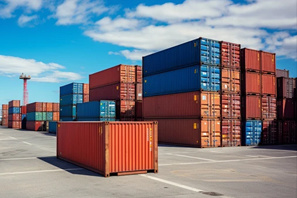

LCL sea freight consolidation
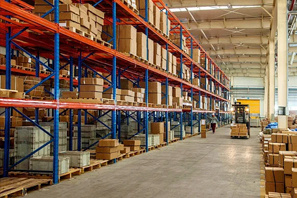

Warehousing services
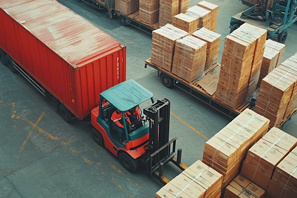

Operation and transfer services


E-commerce logistics


Customs declaration services
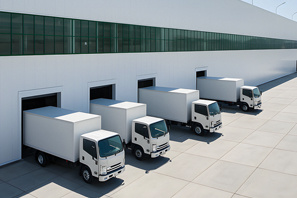

Domesti transportation services
New Customs Rules for Cross-Border E-Commerce in Italy in 2026: €3 Temporary Duty and PID Requirements Take Effect
Published:
2026-08-25 14:15
Source:
From July 1, 2026, the EU's customs rules for low-value imports have been adjusted. Under Regulation (EU) 2026/382 and related provisions, the previous customs duty exemption for imported goods valued below €150 has been removed. A temporary duty of €3 per item now applies to eligible low-value consignments, with the measure currently scheduled to remain in effect until July 1, 2028.
The temporary duty applies to eligible consignments with a total intrinsic value of no more than €150. It is important to note that the €3 charge is not calculated simply by applying €3 to every individual product in a parcel. Instead, it is linked to product classifications and declaration lines. For cross-border e-commerce sellers shipping multiple SKUs or different product categories in the same consignment, the impact is therefore not simply an additional €3 per product. Businesses will need to reassess the cost of each shipment based on product classification and the actual declaration method.
Meanwhile, Italy's €2 administrative fee for low-value parcels remains postponed. This is a separate national measure and is distinct from the EU's €3 temporary duty.
In addition to the changes to customs duties, Product Identifier (PID) requirements for cross-border e-commerce goods will also be introduced. According to relevant European Commission guidance, PID information can be declared voluntarily from July 1, 2026, and will become mandatory from November 1, 2026. The requirement is intended to strengthen product identification and traceability while supporting customs risk management and compliance checks.
With these changes taking effect, customs clearance requirements for cross-border e-commerce in Italy are becoming more detailed. For businesses engaged in China-to-Italy logistics and cross-border e-commerce, accurate product information, customs declarations and clearance procedures are becoming increasingly important.
Meanwhile, for businesses selling locally in Italy, the logistics process extends beyond international transportation. From customs clearance in Italy to Italian fulfillment warehouses, inventory management and local delivery, effective coordination across each stage will remain an important part of cross-border e-commerce logistics.
Related News
V&V SRL 2026 Spring Dinner Gala
V&V SRL recently hosted its 2026 Spring Dinner Gala, bringing all employees together to look back on the past year’s achievements and outline plans for the year ahead.
V&V Srl